


Nowadays, not only women, but also most men take care of the beauty of their nails.But only healthy nails can be beautiful, so it will be useful for everyone to know how to recognize toenail fungus.The sooner a person notices the signs of the disease, the easier it will be to undergo treatment.But it will be difficult to cure an advanced form of onychomycosis.The disease often relapses and is difficult to treat.
Onychomycosis is a common disease.Most often, the fungus affects the toenails, but this disease can also appear on the hands.Onychomycosis of the hands is especially common in women.Signs of the disease on the toenails and fingernails are approximately the same.Symptoms depend on the type of pathogen and where the infection was introduced.
Species
How to identify toenail fungus?This disease is quite insidious, since the symptoms depend on the type of pathogen that caused it.There are several dozen varieties of fungi that can cause onychomycosis.But they can be divided into three groups, depending on the nature of the pathogen.
yeast
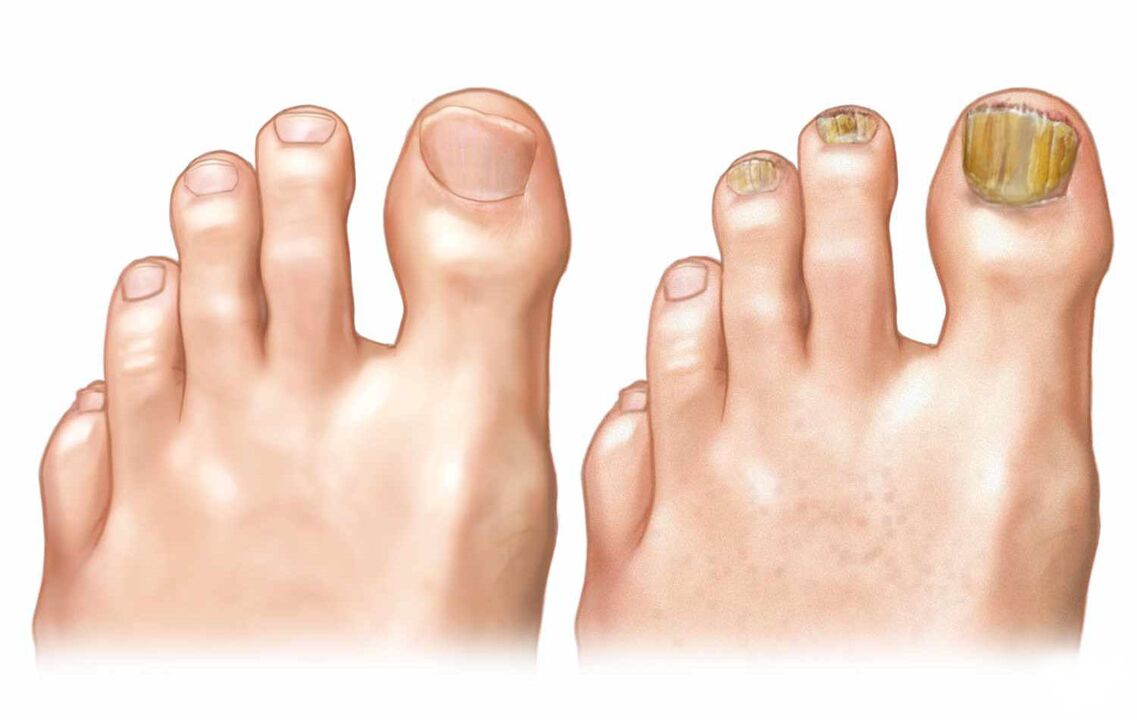
This type of fungus most frequently affects the fingers, but can appear on the feet.The infected nail plate loosens and detaches from the nail bed.In addition to the nail, the skin is also affected and the ridges surrounding the plate become inflamed.They become red, painful and in advanced stages, when you press the roller, white content comes out from underneath.
dermatophytes
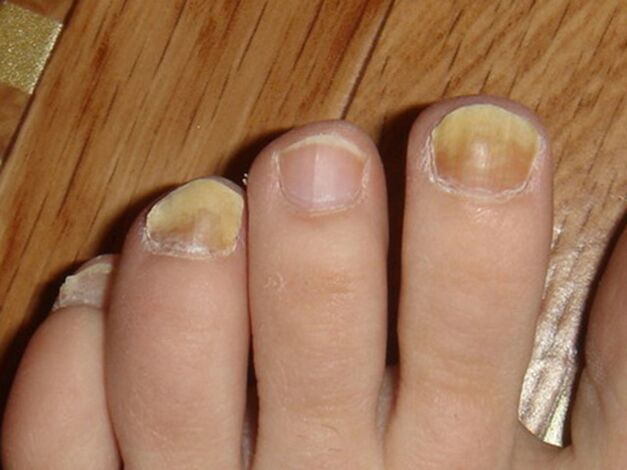
This type of filamentous fungus most frequently affects the toenails.The disease manifests itself gradually.In the first stage, spots or stripes appear that have a yellowish tint.At first these spots are small, but little by little they grow, occupying the entire surface of the nail.
mold
Molds are extremely common, but cause onychomycosis relatively rarely.When affected by this type of pathogen, nails change color.The spots have an unusual color: black, green, dirty gray.
Forms
The disease can present itself in several ways.Symptoms of the disease depending on the form of onychomycosis:
- Latero-distal.This is the most common case;The first changes in the nail can be noticed in the growing part of the nail in one of the corners (sometimes in both corners at the same time).
- Proximal.In this case, the first changes appear on the inner edge of the nail.
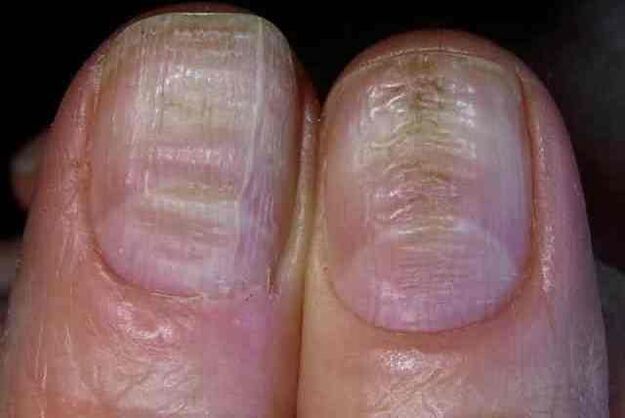
- Superficial.Unlike the previous forms, in the superficial type of onychomycosis the pathogen does not penetrate deeply into the plaque.The symptoms are unusual, spots appear in the center of the plate, the nail becomes loose, the entire surface begins to peel off and flakes come off.
Clinical manifestations
Fungal nail diseases do not cause discomfort in the first stage.The patient does not feel pain or other unpleasant sensations.However, an attentive person may notice that the appearance of the nails has changed.Main signs of the disease:
- loss of natural shine, tarnish;
- the appearance of spots or streaks, their color differs from the color of a healthy plate;
- grooves may appear on the surface;
- the plate can change shape;
- the nail may begin to thicken or, on the contrary, thin and atrophy;
- the plaque delaminates, begins to crumble and subsequently falls behind the skin;
- In advanced stages, physical discomfort also appears, pain appears when applying pressure;
- When secondary infection occurs, inflammation and suppuration may develop.
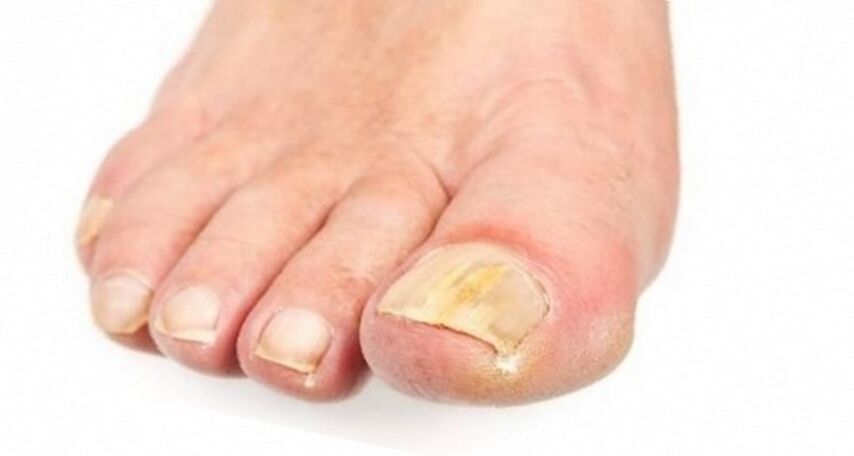
Advice!Onychomycosis can occur in isolation, but often this disease is accompanied by mycosis of the skin of the feet.Redness, diaper rash and cracks appear between the fingers.The feet begin to emit an unpleasant odor.
Mushrooms or not?
Unfortunately, fungal nail diseases do not have specific symptoms.A similar clinical picture can occur with other dermatological problems.For example, with psoriasis.To accurately say whether a fungal disease exists in the fingernails or toenails, laboratory testing is necessary.
For analysis, take a piece of nail (in its distal form) or scrape the surface of the plate.The material collection procedure is safe and painless.The biological material is then delivered to the laboratory.
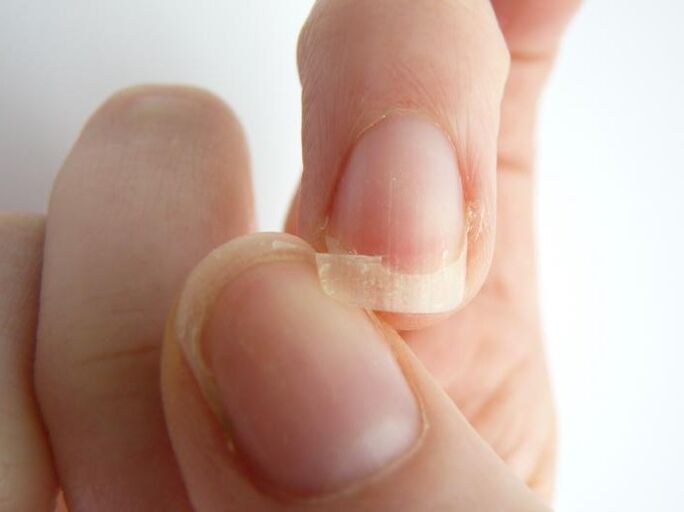
Microscopic examination reveals the presence of a fungal infection, but does not determine the type of pathogen.To make an accurate diagnosis, it is necessary to place the collected material (nail particles) in a nutrient medium and under favorable conditions.
Advice!The most favorable conditions for fungal growth are heat and humidity.
The analysis results will be available only after 5 days.During this time, the fungal colony will grow so much that it will be possible to determine the type of pathogen by its appearance.Additionally, the study allows us to determine which antifungal agents most effectively destroy this fungus.
To do this, filter paper is moistened with solutions of antifungal agents and then applied to the fungal colonies.After a while, the paper is removed and it is observed which places will most effectively stop the growth of microorganisms.
Home methods
It happens that for some reason you cannot enter the laboratory.Is it possible to determine the presence of a fungal infection at home?Of course, home diagnostic methods are far from perfect;They cannot be compared with laboratory research methods.
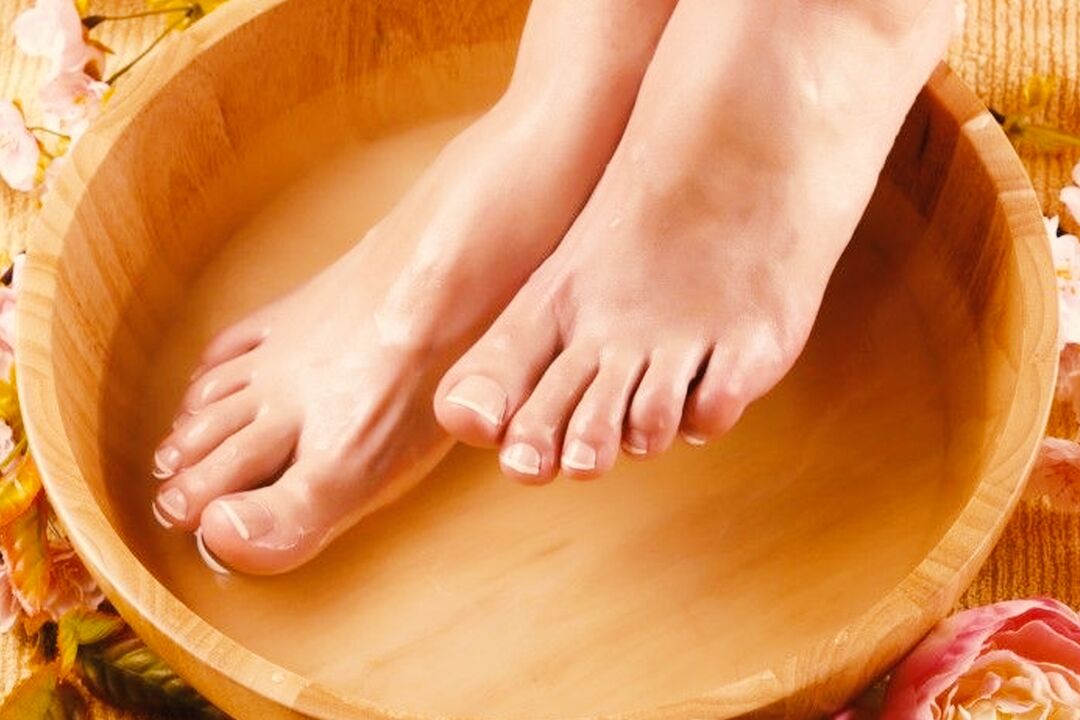
However, even these simple methods, in most cases, can detect the presence of a fungal infection.Many people have a bottle of garnet potassium permanganate crystals at home.A solution of this product has antiseptic properties and is used in medicine and gardening.
This solution will also help in the home diagnosis of onychomycosis.To carry out diagnoses it is necessary:
- prepare a strong dark purple solution in a small container;
- pour warm water into a bowl or other container in such an amount that you can completely immerse your nails in it;
- add the previously prepared strong solution drop by drop to the water, achieving a soft lilac solution;
- dip the limbs into the solution so that the nails are completely covered with the solution;
- hold for about ten minutes;
- then remove the limb from the solution and examine the nails, healthy nail plates will turn brown, and the patients will remain unchanged.
Advice!Never add dry crystals to your bath water.If the crystals do not dissolve, they can cause burns if they come into contact with the skin.
Advice!Before diagnosing the use of potassium permanganate, make sure that the potassium permanganate solution does not cause allergies.
How to avoid infection?
Everyone is at risk for onychomycosis, but there are people who are at risk.These are:
- older people;
- people who frequently come into contact with water (dishwashers, laundresses, etc.);
- patients with diabetes mellitus;
- patients who have severely weakened immunity.
In addition, non-compliance with hygiene rules contributes to infection.In particular, use things together with the patient.Therefore, never wear other people's shoes, use your own towel, never walk barefoot in public bathrooms, wear rubber flip-flops.
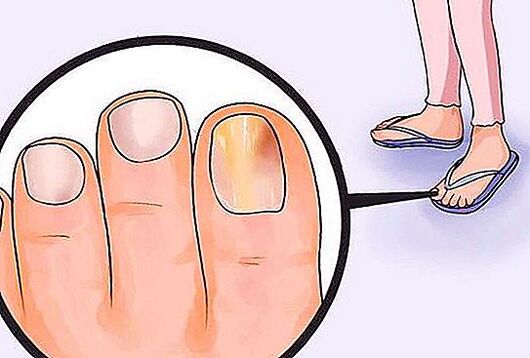
The risk of contracting onychomycosis is highest in the following places:
- public places where people undergo aquatic procedures: showers, baths, water parks, swimming pools;
- shoe stores;
- nail service salons.
Additionally, you can easily become infected at home if one of your family members has onychomycosis.The use of active preventive and protective measures will help avoid infection and prevent the development of the disease.
Every person should know the answer to the question of how to identify nail fungus.Knowing what a sick nail looks like will help you notice negative changes in a timely manner.If onychomycosis is detected in the early stages, it will be much easier to cure the disease.But in an advanced stage, treatment will be difficult and prolonged;The course of treatment may last a year or more.